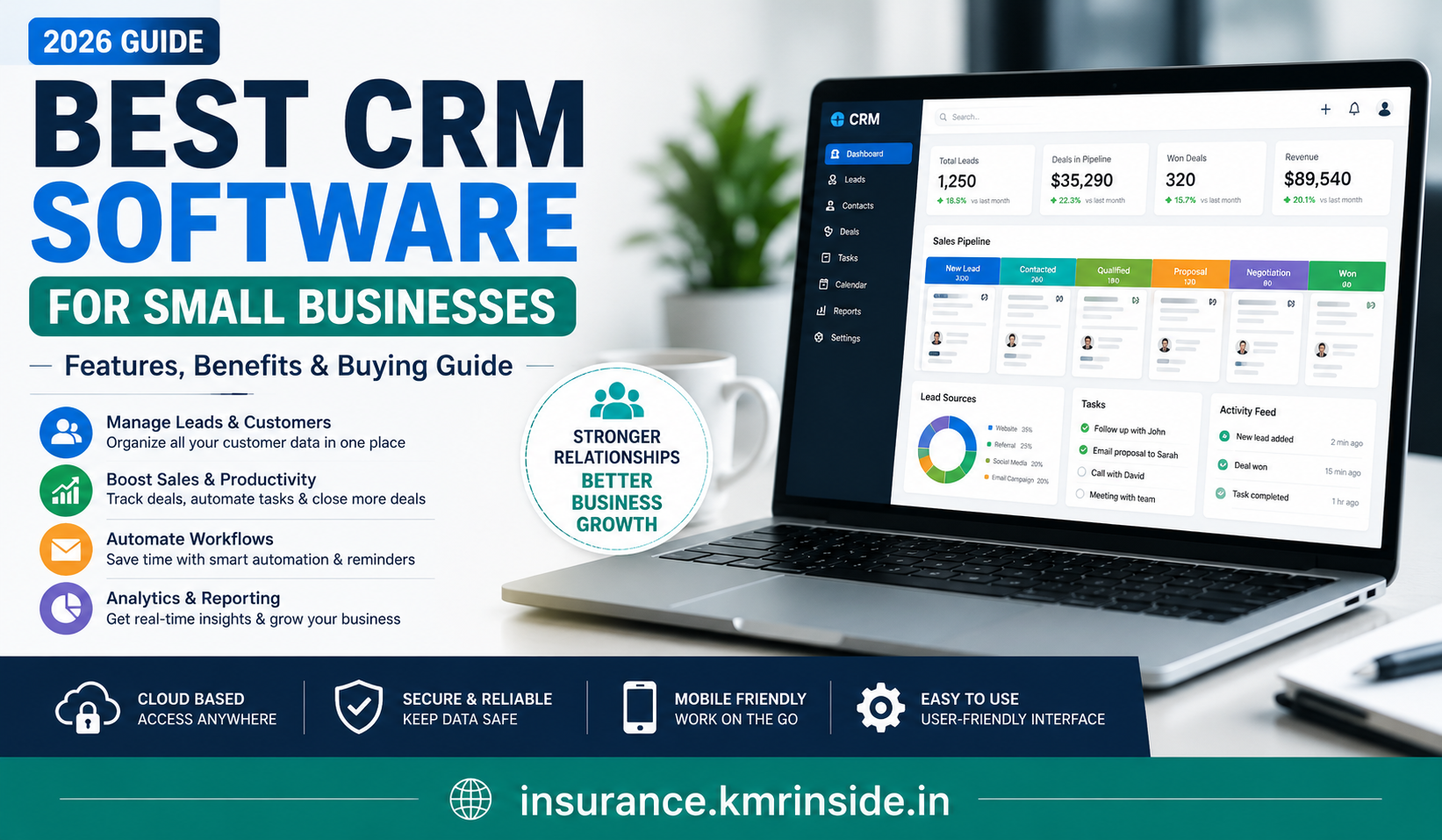
Customer relationships are the foundation of every successful business. Whether you’re running a startup, a growing eCommerce store, a digital marketing agency, or a local service business, managing customer interactions efficiently can significantly improve sales, customer satisfaction, and long-term growth.
This is where Customer Relationship Management (CRM) software becomes essential.
A CRM system helps businesses organize customer data, track leads, automate follow-ups, improve communication, and increase revenue. In 2026, CRM platforms have evolved beyond simple contact management. Modern CRMs now integrate artificial intelligence (AI), automation, marketing tools, analytics, and customer support into one centralized platform.
In this guide, we’ll explain what CRM software is, why businesses need it, the key features to look for, and how to choose the best CRM for your organization.
What Is CRM Software?
CRM stands for Customer Relationship Management.
A CRM is software that helps businesses store customer information, monitor interactions, manage sales opportunities, and strengthen relationships with prospects and existing customers.
Instead of using spreadsheets or scattered notes, all customer information is stored securely in one centralized dashboard.
A CRM typically includes:
- Customer contact information
- Sales pipeline
- Lead management
- Email tracking
- Meeting history
- Notes
- Purchase history
- Customer support records
This gives every team member access to the same accurate customer information.
Why Every Business Needs a CRM
As a business grows, managing customer relationships manually becomes increasingly difficult.
CRM software helps businesses:
- Increase sales
- Improve customer retention
- Save time
- Automate repetitive tasks
- Organize customer information
- Track employee performance
- Improve communication
Companies that effectively use CRM software often experience higher customer satisfaction and stronger revenue growth.
Benefits of CRM Software
1. Better Lead Management
Businesses receive leads from various sources including:
- Websites
- Facebook Ads
- Google Ads
- Email campaigns
- Referral programs
CRM software collects these leads in one place, ensuring none are lost.
Sales representatives can prioritize high-value leads and follow up promptly.
2. Increased Sales
CRM systems help sales teams monitor every stage of the customer journey.
Instead of guessing which prospect is ready to buy, businesses can see exactly where each lead is in the sales pipeline.
This improves conversion rates and shortens the sales cycle.
3. Improved Customer Service
Support teams can instantly view:
- Previous conversations
- Purchase history
- Support tickets
- Customer preferences
This enables faster issue resolution and a better customer experience.
4. Automation Saves Time
Modern CRM software automates repetitive tasks including:
- Welcome emails
- Follow-up reminders
- Appointment scheduling
- Lead assignments
- Sales notifications
- Customer onboarding
Automation allows employees to focus on higher-value work.
5. Centralized Customer Database
Instead of searching through emails and spreadsheets, all customer information is stored in one secure location.
This improves collaboration across sales, marketing, and customer support teams.
Essential CRM Features
Not every CRM offers the same functionality.
Here are the most important features businesses should consider.
Contact Management
Store customer names, phone numbers, email addresses, company details, and communication history.
Sales Pipeline Management
Visual sales pipelines allow businesses to track prospects through every stage of the buying process.
Examples include:
- New Lead
- Contacted
- Qualified
- Proposal Sent
- Negotiation
- Won
- Lost
Email Integration
Most modern CRM platforms connect directly with email providers.
Benefits include:
- Email tracking
- Automatic logging
- Templates
- Follow-up reminders
Task Management
Sales teams can schedule:
- Calls
- Meetings
- Follow-ups
- Deadlines
This reduces missed opportunities.
Reporting & Analytics
CRM dashboards provide valuable business insights such as:
- Sales performance
- Conversion rates
- Revenue forecasts
- Customer acquisition costs
- Team productivity
Mobile Access
Cloud-based CRM software allows employees to access customer information from smartphones and tablets.
This is especially useful for remote sales teams.
AI Features in Modern CRM Software
Artificial Intelligence has transformed CRM platforms.
Modern AI-powered CRM systems can:
- Predict customer behavior
- Score leads automatically
- Generate sales forecasts
- Recommend follow-up actions
- Draft sales emails
- Summarize customer conversations
AI helps businesses make smarter decisions while saving valuable time.
Industries That Benefit from CRM Software
CRM software isn’t limited to large corporations.
Many industries rely on CRM systems daily.
Examples include:
- Real Estate
- Insurance
- Healthcare
- Banking
- SaaS Companies
- Marketing Agencies
- Law Firms
- Educational Institutions
- Travel Agencies
- Automotive Businesses
- Construction Companies
- Financial Advisors
Any business that manages customer relationships can benefit from a CRM.
Cloud CRM vs On-Premise CRM
Cloud CRM
Advantages:
- Accessible anywhere
- Automatic updates
- Lower upfront costs
- Easy collaboration
- Secure cloud backups
Most businesses now prefer cloud-based CRM platforms.
On-Premise CRM
Advantages:
- Full control over data
- Custom server management
- Internal hosting
However, on-premise systems often require higher maintenance costs and dedicated IT support.
How to Choose the Best CRM
Before selecting a CRM, consider the following factors.
Business Size
A small startup has different requirements than a multinational company.
Choose software designed for your organization’s size.
Ease of Use
Complicated software often leads to low employee adoption.
Look for an intuitive interface with minimal learning curve.
Integration
Ensure the CRM connects with tools you already use, including:
- Email platforms
- Accounting software
- Marketing automation
- Calendar applications
- Customer support software
Automation Features
The more repetitive work a CRM automates, the greater the productivity gains.
Scalability
Select software that can grow alongside your business.
Migrating CRM systems later can be time-consuming and expensive.
Customer Support
Reliable technical support is essential, especially during implementation.
Common CRM Mistakes
Businesses often fail to maximize CRM value because of avoidable mistakes.
Common errors include:
- Poor employee training
- Incomplete customer data
- Ignoring automation features
- Not updating customer records
- Choosing software with unnecessary complexity
Successful CRM adoption requires ongoing commitment and regular data maintenance.
CRM Best Practices
To maximize return on investment:
- Keep customer data updated.
- Train employees regularly.
- Automate repetitive tasks.
- Monitor sales reports weekly.
- Review pipeline performance monthly.
- Integrate CRM with marketing tools.
- Use dashboards for decision-making.
Consistent usage produces the best long-term results.
Future of CRM Software
CRM technology continues to evolve rapidly.
Future trends include:
- AI-powered virtual sales assistants
- Voice-enabled CRM systems
- Predictive customer analytics
- Personalized marketing automation
- Advanced workflow automation
- Deeper integrations with business software
As artificial intelligence advances, CRM platforms will become even more intelligent and capable of improving customer relationships automatically.
Final Thoughts
CRM software has become an essential tool for businesses of every size. From organizing customer information to automating sales processes and improving customer service, a modern CRM can significantly increase productivity and revenue.
The best CRM is not necessarily the one with the most features—it is the one that fits your business needs, integrates with your existing tools, and is easy for your team to use consistently.
Whether you’re a startup looking to organize leads or an established business aiming to scale operations, investing in the right CRM software can help build stronger customer relationships, close more deals, and drive sustainable growth in 2026 and beyond.